
 UAE
UAE  Saudi Arabia
  USA
USA How to Clean an Air Fryer Without Ruining the Non-Stick Coating
A practical guide to cleaning an air fryer: washing the basket and non-stick coating, removing grease and smells, dishwasher-safe parts, and what not to do.
We may earn a commission from purchases through our links, at no extra cost to you. Full disclosure.
Offer status: September 26, 2026
- Philips Essential XL HD9270/91 (6.2L, 2000W): Recommendation paused after the September 26, 2026 check: the title says HD9270/90, while the part number and description say HD9270/91. The price and its date remain historical until the exact variant is confirmed. The listing states an international warranty.
The cards and their Amazon check links remain available. Earlier mentions of these products below are historical context, not current purchase recommendations. Other products retain their own price-check dates.
The air fryer has found its way into almost every Egyptian kitchen, yet most of us skip one step that affects both how the food tastes and how long the machine lasts: cleaning. The oil and crumbs that build up in the basket don’t just cause smells and smoke, they also make food taste burnt and shorten the life of the non-stick coating. The good news is that cleaning it properly is far easier than you’d think, once you know how to do it and what to avoid.
The quick answer
Wash the air fryer basket and drawer after every use with a soft sponge, warm water, and regular dish soap, and stay well away from steel wool and abrasives that scratch the non-stick coating. Wipe the heating element once it cools, and beat odors by stopping grease from building up. Many parts are labeled dishwasher-safe, but hand washing makes the coating last longer.
Key takeaways
- An air fryer is essentially a compact convection oven that circulates hot air around the food, so the oil and crumbs it kicks up settle on the basket and heating element (air fryer definition from University of Nebraska-Lincoln Extension).
- The basket and drawer have a non-stick coating that scratches easily, so steel wool and abrasive powders are completely off-limits.
- Cleaning after every use prevents smoke and smell, because leftover oil carbonizes when reheated and produces smoke and a burnt taste.
- A bad air fryer smell comes from grease buildup, not a fault in the machine, and the fix is regular cleaning rather than air fresheners.
- Never submerge the body of the air fryer in water, because it houses an electrical circuit and a heating element, so wipe it with a damp, well-wrung cloth only (convection oven background from Britannica).
Why is cleaning after every use important?
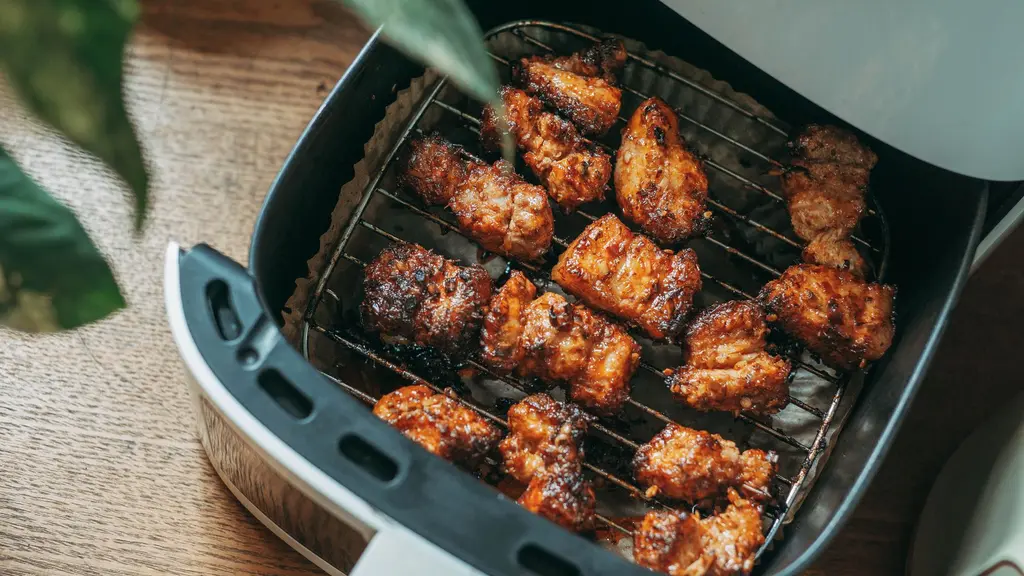
The air fryer works on the principle of convection: a fan rapidly circulates hot air around the food so it cooks and crisps. While this happens, tiny sprays of oil and fat plus food crumbs fly up and settle on the walls of the basket and on the heating element above. If you leave them, those deposits reheat on the next cook and carbonize (turning into a black, burnt layer), which is exactly what causes the smoke, smell, and burnt taste that many people complain about.
That’s why the simplest rule is this: wash the basket and drawer every time, once the machine has cooled. Two minutes now saves you a tiring deep clean later, and keeps the taste of your food clean.
Daily cleaning steps after every use
The daily clean is simple and takes just a few minutes:
- Unplug the unit and let it cool for 15 to 20 minutes. Never clean it while it’s hot or still plugged in.
- Remove the basket and drawer and tip out any leftover food or excess oil into the bin.
- Soak if food is stuck on: leave the basket in warm water and dish soap for 10 minutes, which loosens the grime without hard scrubbing.
- Wash with a soft sponge and regular dish soap, and work the corners and the underside of the rack thoroughly.
- Wipe the heating element with a damp, well-wrung cloth once it has cooled, to remove any oil sprays that settled on it.
- Dry everything well before reassembling, because leftover water can cause spots or rust.
The basket and non-stick coating: do and don’t
The non-stick coating is the most delicate part of the air fryer, and any scratch in it makes it flake and start sticking to food afterward. This table sums up the right and wrong moves:
| Situation | Do | Don’t |
|---|---|---|
| Scrubbing the basket | Soft sponge or the sponge side | Steel wool or a rough scourer |
| Cleaners | Regular dish soap | Abrasive powders or strong bleach |
| Stuck-on food | Soak in warm water first | Chip it off with a knife or metal tool |
| Oil sprays | Wipe them as you go | Let them build up and carbonize |
| Drying | A soft cloth | Leaving it wet to dry on its own |
The golden rule: if you’re scratching the coating, you’re shortening the air fryer’s life. The non-stick coating is designed to make cleaning easy in the first place, so it doesn’t need force, it needs gentleness.
Removing grease, fat, and stubborn smells
If your air fryer has developed a smell, the cause is almost certainly grease built up on the heating element or in the corners of the drawer. Try these steps in order:
- Deep wash the basket and drawer with hot water and soap, soaking for 15 minutes if the grease is set in.
- Heating element: once it’s fully cool, tilt the unit gently and wipe the element from above with a sponge dampened in soapy water, then with a clean cloth dampened in plain water. Be careful not to wet the electrical circuit.
- The lemon or vinegar trick: place half a lemon or two tablespoons of diluted white vinegar with a little water in the basket, and run the air fryer empty on low heat for 3 to 5 minutes. The steam loosens odors and light grease, and afterward leave it open to air out. Don’t combine vinegar with bleach or any cleaner containing chlorine, because together they give off toxic gases, and rinse and dry the basket before you reach for a different cleaner.
- Baking soda for stubborn stains: make a paste of baking soda and a little water, apply it to the stain, wait 10 minutes, and wipe it off with a soft sponge. Baking soda lifts stains without scratching like abrasives do.
Avoid spraying air fresheners or harsh cleaners inside the air fryer, because the idea is to remove the source of the smell (the grease), not mask it.
Dishwasher-safe parts versus hand-wash-only parts
Many people ask: can I put the basket in the dishwasher or not? The answer depends on the model, but there’s a general rule:
- The removable parts (basket, drawer, rack, separator tray) are usually labeled dishwasher-safe in the manufacturer’s manual, meaning they can technically handle the dishwasher.
- However, repeated dishwasher cycles with their high heat and strong detergents can weaken the non-stick coating over time, so hand washing is still safer and longer-lasting for the coating.
- The body of the air fryer itself (which holds the motor and heating element) must never go in the dishwasher or be submerged in water at all, so wipe it from the outside with a damp, well-wrung cloth only.
If your model states the parts are dishwasher-safe and you want the convenience, use only the top rack away from the heating element, and understand that you may trade a little coating life for the convenience.
The air fryer that’s easy to clean
If you’re still shopping for one, the design makes a real difference to how easy cleaning is. Air fryers with removable parts and a good non-stick coating clean up in minutes. The Philips Essential XL HD9270 card is a historical reference, not a current buying recommendation. The September 26, 2026 listing check found HD9270/90 in the title but HD9270/91 in the part number and description, so the exact variant remains unresolved. The listing states an international warranty; local coverage is not established. Keep its old price separate from current offers and compare the remaining current cards in our guide to the best air fryer in Egypt.
When to stop and call a technician
- A sharp electrical smell or unusually heavy smoke, at any time.
- A burning smell or light smoke that continues once the basket, drawer, and cooled heating element are clean.
- Water has entered the body that houses the motor and wiring.
- The outer casing gets hotter than usual with a normal load and clear vents.
- The cord or plug is cracked or damaged, or the breaker keeps tripping.
If you see any of these signs, unplug the air fryer, stop using it, and have a qualified technician look at it before you switch it on again. If you’ve been through the steps above and a first-use smell has not faded after a few empty runs, the basket coating is scratched or starting to flake, you cannot reach the grease around the heating element without wetting the electrical parts, or the air fryer will not turn on, heat, or stay on even with the basket seated properly, check your model’s manual, then ask a qualified technician or the brand’s authorized service center about a replacement basket or the heating fault.
Bottom line
Cleaning an air fryer isn’t a luxury, it’s what keeps your food tasting right and your machine lasting. Wash the basket and drawer after every use with a soft sponge and soap, stay away from steel wool and abrasives so you don’t scratch the coating, wipe the heating element once it cools, and fight smells by removing grease rather than reaching for fresheners. The parts are usually dishwasher-safe but hand washing is kinder to the coating, and the body must never be submerged in water. And if you’re still deciding whether to buy one at all, read is an air fryer worth it?, or if you’re torn between one and an oven see air fryer vs oven. To pick the right size from the start, head back to our guide on how to choose an air fryer or browse our air fryers section.
Sources
- University of Nebraska-Lincoln Extension, “How air fryers work”, definition of the air fryer and how it works (moving hot air that deposits oil and crumbs on the basket): https://food.unl.edu/free-resources/newsletters/food-safety-tips-electric-air-fryers/
- Britannica, “Convection”, background on the convection oven and the principle of forced hot-air cooking the air fryer relies on: https://www.britannica.com/science/convection
About this guide
- Editing
- Mizaan Home editorial team
- Last updated
Research based on published specifications, without hands-on testing. How we choose
Prices are checked per product; the oldest check on this page:
This analysis is based on published information from University of Nebraska-Lincoln Extension (How air fryers work), Britannica (Convection).
Frequently asked questions
How often should I clean my air fryer?
The basket and drawer should be washed after every use so oil and crumbs don't build up and cause smoke and odor. The heating element and the inside of the body only need a quick wipe every few uses, with a deeper clean once every week or two depending on how heavily you use it.
Can I put the air fryer basket in the dishwasher?
Many parts (basket, drawer, rack) are labeled dishwasher-safe in the manufacturer's manual, but repeated dishwasher cycles can weaken the non-stick coating over time. Hand washing with a soft sponge is gentler on the coating and extends its life. Check your model's manual first.
How do I get rid of a bad air fryer smell?
Wash the basket and drawer well after each use, and wipe the heating element once it cools. For stubborn smells, place half a lemon or a little diluted white vinegar in the basket and run it empty on low heat for a few minutes, then leave it open to air out. Grease buildup is the main cause of odor.
Can I use steel wool or abrasives to clean the basket?
No, never. Metal scourers, rough sponges, and abrasive powders scratch the non-stick coating, making it flake and lose its function. Use only a soft sponge, regular dish soap, and warm water. If food is stuck on, soak it in hot water first instead of scrubbing hard.