Water filters in Egypt: multi-stage systems and tap purifiers
A 3, 5, or 7-stage reverse-osmosis system, or a purifier that mounts on the tap with no under-sink work? We compare listed stage counts, replacement-cartridge cost, listed warranty, buyer ratings, and local prices so you can pick the right water filter for your home and budget.
Use the guides to compare your priorities, the specifications and the limits of each choice.
In the guide: Tank Power Water Filter 7 stages RO, 1 Year Warranty
What a 7-stage water filter actually contains, which stage does the real work, and when 5 or 3 stages is honestly enough for your home.
Compare the main types
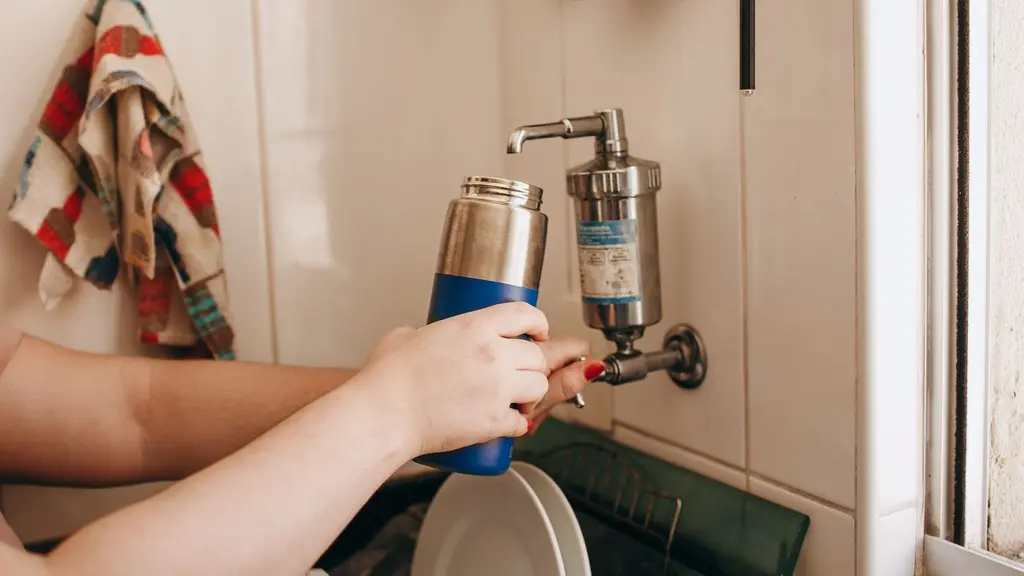
Start with one question before price: are you installing under the sink, or do you want something that mounts on the tap with no plumbing? Multi-stage systems sit under the sink with a small dedicated tap on the counter, and they are separated by the stage count stated in the listing: 3 stages is the affordable entry point, 5 stages is a wider step, and 7 stages usually adds a reverse-osmosis (RO) membrane. Keep in mind that an RO system runs with a storage tank and sends part of the water to drain, so it needs space under the sink and adequate water pressure. It is not simply a bigger stage number. Tap purifiers, on the other side of the fork, clamp onto the tap spout in minutes with no plumbing work, and their practical measures are the cartridge life and flow rate stated in the listing. The rule that saves money: a higher stage count does not automatically mean better water, and the real cost difference shows up in the replacement cartridge you buy on a regular cycle, not in the price you pay on day one.
What to watch out for before you buy
Choosing on the stage number alone, before checking the space available under the sink and the price of the replacement cartridge.
Budgeting only the day-one purchase price, leaving the replacement cartridge that gets changed on a regular cycle out of the calculation entirely.
Paying a premium for listing wording about international standards without confirming it yourself in the awarding body's own public database.
Frequently asked questions
3, 5, or 7 stages?
The stage count describes how the unit is built, not a guaranteed result. Three stages is the affordable entry point, five stages is a wider step, and seven stages usually adds a reverse-osmosis membrane along with a storage tank and a larger footprint under the sink. Start from the space you have and the replacement-cartridge budget, then compare stage counts.
Under-sink system or tap purifier?
If you are ready for an installation and have room under the sink, a multi-stage system is the usual route. If you rent or do not want plumbing work, a tap purifier clamps onto the spout in minutes, and its practical measures are the cartridge life and flow rate stated in the listing.
Does a filter replace a water dispenser?
They solve two different problems. A filter works on the water already coming out of your tap and improves its taste and smell, while a dispenser serves chilled and hot water from a bottle you buy. If your problem is the taste of tap water, the filter is the route. If your problem is chilled water on demand, the dispenser is closer. Plenty of homes run both.
This guide contains affiliate links: we may earn a commission when you buy through
them, at no extra cost to you. Our picks are based on research, not payment.
How we choose ·
Full disclosure.

 UAE
UAE  Saudi Arabia
  USA
USA 
 Tank Power Water Filter 7 stages RO, 1 Year Warranty Best overall Last price we verified: 4,225 EGP (August 2026) Check price on Amazon.eg
 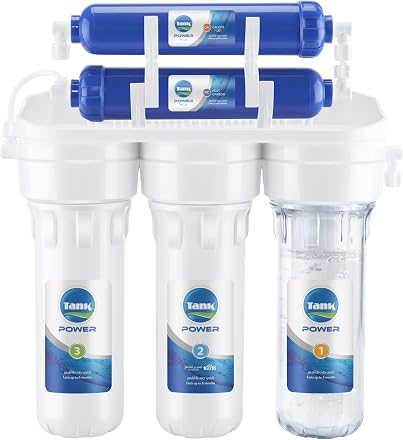 Tank Power Water Filter 5 Stages Plus, 1 Year Warranty Best value for a wider stage count Last price we verified: 1,299 EGP (August 2026) Check price on Amazon.eg
  Tank Power Water Filter 3 Stages, 1 Year Warranty Best budget pick Last price we verified: 949 EGP (August 2026) Check price on Amazon.eg