
 Egypt
Egypt  Saudi Arabia
  USA
USA Why Is My House So Humid in the UAE? Causes and Fixes
Measure indoor humidity, check leaks and everyday moisture sources, then assess ventilation and AC operation before choosing a dehumidifier for a UAE home.
We may earn a commission from purchases through our links, at no extra cost to you. Full disclosure.
A humid room needs a moisture check before an appliance purchase. Coastal outdoor air, cooking, showers, drying laundry, leaks and cooling-system problems can all contribute. The useful question is which source is keeping your room damp.
Measure a pattern, not one moment
Use a hygrometer to record relative humidity and temperature in the affected room at several times, including before and after showers, cooking or laundry drying. Note condensation, damp patches and smells alongside the readings. Avoid treating a reading beside a wet surface as the condition of the whole home.
The EPA’s moisture guidance recommends below 60% relative humidity, ideally 30–50% where possible. That is moisture-management guidance, not a diagnosis or a guaranteed comfort target for every room.
Check where water enters the air
Look for plumbing or building leaks, and report damp walls or ceilings to building maintenance. Use the intended kitchen and bathroom extraction, and check that it works. Drying laundry adds moisture indoors; consider a suitable alternative or a room with effective moisture removal.
Opening windows helps only when the outdoor conditions and air quality are suitable. “Early morning” is not a reliable promise of dry air in a coastal climate. Closed windows can reduce incoming humid air while AC is running, so opening them is not automatically the cure either.
If the AC is running but the room stays damp
Air conditioning can remove moisture as it cools. If humidity stays high, ask the system provider to check its operation, drains and controls. Have the technician explain the right settings for your system. Switching a fan from ON to AUTO is not a fix for every district-cooling or fan-coil setup.
When a dehumidifier is useful
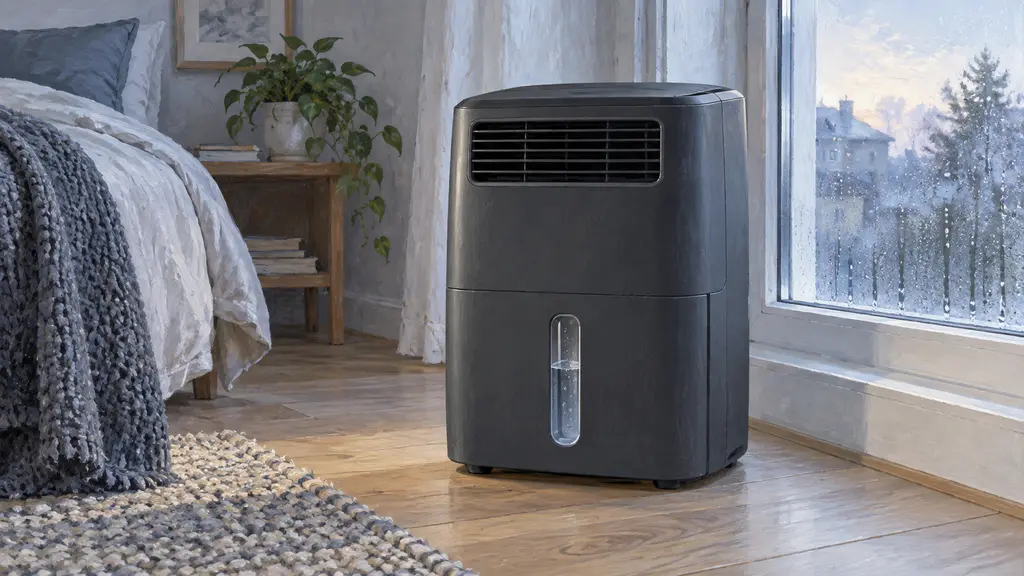
After addressing the moisture source, compare a dehumidifier if measured humidity remains high. Choose using the room conditions, rated extraction conditions, operating temperature and drainage needs. A tank-size label is not a room-sizing calculation. Our UAE dehumidifier comparison separates compressor devices from mini units and passive absorbers.
If mold returns or materials stay wet, ask for the underlying cause to be assessed. Lowering the room reading does not prove that hidden dampness has been fixed.
If a unit is still needed after repairs, use the dehumidifier buying guide to prepare your room measurements. Compare the dated offers in UAE dehumidifier prices after checking the model’s capacity.
About this guide
- Editing
- Mizaan Home editorial team
- Last updated
Research based on published specifications, without hands-on testing. How we choose
Frequently asked questions
What humidity should I aim for?
EPA guidance is below 60% relative humidity, ideally 30–50% where possible. Measure a pattern in the affected space and address moisture sources; a reading alone does not diagnose a building problem.
Why is the house humid with AC running?
Possible causes include incoming moisture, indoor activities, leaks or cooling-system operation. Ask building maintenance to check the system and drainage rather than assuming the thermostat setting is the only cause.
Should I open windows every morning?
Only when outdoor moisture and air quality conditions make that helpful. Time of day alone does not establish that the outside air will dry the room.
Should I buy a dehumidifier immediately?
First measure humidity and check the source. A suitable unit can help with residual moisture, but persistent leaks or damp materials need repair or professional assessment.