
 Egypt
Egypt  UAE
UAE  USA
USA Water Dispenser vs Water Filter: Which Fits Your Kitchen?
A practical comparison of a bottled water dispenser and a countertop water filter: upfront and monthly cost, hot water, installation, and maintenance, to help you pick.
We may earn a commission from purchases through our links, at no extra cost to you. Full disclosure.
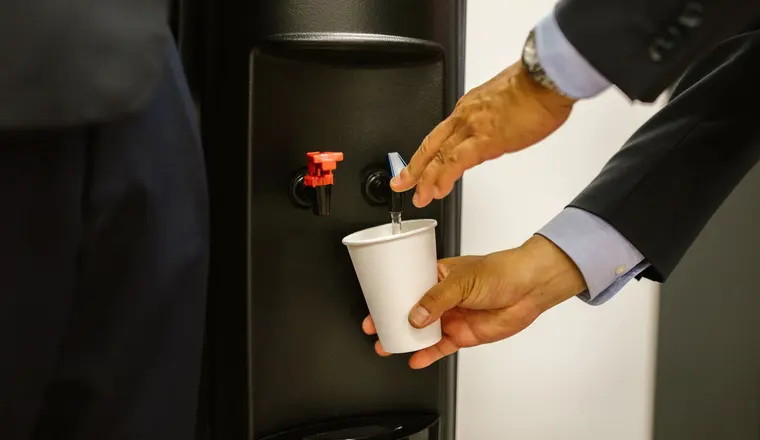
A bottled water dispenser gives you hot and cold water on tap instantly with no installation, at the cost of a recurring monthly bottle purchase. A countertop water filter runs off your own tap water, saving you repeated bottle purchases, but it usually requires an upfront installation investment and a periodic filter cartridge swap, and most models don’t give you a built-in hot tap. If your priority is instant hot and cold water with zero installation, a water dispenser is the simpler answer.
Super General 3-Tap Bottom-Loading Water Dispenser: There was no main offer on Amazon.sa when we re-checked on 25 September 2026. For a full dispenser with a main offer at our last check, compare the Panasonic SDM-WD3128 in the best water dispenser in Saudi Arabia guide.
The quick answer
A bottled water dispenser gives you instant hot and cold water with no installation, at the cost of a recurring monthly bottle purchase. A countertop water filter runs off your own tap water, cutting how often you buy bottles, but needs an upfront investment and periodic cartridge replacement, and most models skip the built-in hot tap. If speed and simplicity without installation matter most, a dispenser is the simpler pick.
Key points
- A water dispenser runs on water pre-bottled in 5-gallon bottles (bottled water background from US FDA), while a water filter treats your own tap water at the moment you use it (water filter background from US CDC).
- A water dispenser needs zero installation, you load the bottle and the taps work immediately, while some advanced water filters need under-sink plumbing.
- A built-in hot tap is a genuine feature of a full dispenser, and usually missing from simple countertop filters.
- A dispenser’s cost recurs monthly with every new bottle, while a filter’s cost is front-loaded plus a less frequent cartridge swap.
- The two aren’t necessarily mutually exclusive, some households combine both depending on whether instant hot water or fewer bottle purchases matters more.
How each system actually works
A water dispenser is a unit connected to a pre-bottled water container, usually 5 gallons, and typically houses a heating element and a cooling element that give you hot, cold, and room-temperature taps ready instantly once the bottle is loaded. The water itself was already treated and bottled by the manufacturer, so the dispenser does no filtering of its own, its job is purely storage, heating, and cooling.
A countertop water filter, by contrast, connects to the kitchen faucet or sits beside it, and passes your own tap water through a filtering medium, usually activated carbon or finer membranes in reverse osmosis systems, to remove impurities and odors before the water reaches your glass. The result is drinking water from your permanent tap source, with no need to store bottles or wait for delivery.
The full comparison: water dispenser vs water filter
| Criterion | Water dispenser (bottled) | Countertop water filter |
|---|---|---|
| Upfront cost | Dispenser price only, no installation | Filter price, sometimes extra installation |
| Recurring cost | A new bottle every time one runs out | Replacement cartridge every few months |
| Hot water | Built into most full-size units | Usually unavailable except in special combo units |
| Installation | None, load the bottle and use it | Ranges from simple to under-sink plumbing |
| Water source | Pre-bottled water from the manufacturer | Your own tap water, filtered |
| Best for | Instant hot water with zero installation | Cutting how often you buy bottles |
When is a water dispenser the right call?
If your priority is hot water ready for tea or instant coffee without waiting for a kettle, instant cold water in summer, and you’d rather skip any installation or technical upkeep, a water dispenser is the simpler solution. A three-tap bottom-load dispenser combines these functions without lifting the bottle overhead. Compare current models in our guide to the best water dispenser in Saudi Arabia. The trade-off is the recurring bottle cost that adds up over time depending on your household’s use.
View the Super General 3-Tap reference listing on Amazon.sa ↗
When is a water filter the right call?
If you want to get rid of the hassle of constantly buying new bottles, and don’t mind an upfront investment in installation plus swapping a filter cartridge every few months, a countertop filter gives you drinking water from a permanent source with no waiting for delivery. The trade-off is that you generally won’t get a built-in hot tap as easily, and you’ll need to keep up with a regular cartridge replacement schedule to maintain filtering quality.
Do you need both?
That’s a genuine option, not a contradiction. Some households run a tap water filter for cooking and heavy daily drinking use, while keeping a small water dispenser or bottle pump just for instant hot water for tea and instant coffee without waiting on a kettle. If your budget allows it, this combines the best of both systems. If you’re still torn between the two dispenser types themselves, bottom-load or top-load, see bottom-load vs top-load water dispensers.
Bottom line
There’s no absolute winner between a water dispenser and a countertop water filter, the choice depends on your priority. If speed and instant hot water with no installation matter most, a dispenser is the simpler choice. Compare models in our guide to the best water dispenser in Saudi Arabia. If cutting how often you buy bottles and longer-term savings matter more, a countertop filter is worth considering despite its upfront investment. Keep the dispenser’s reservoir clean no matter which you choose, see our guide on how to clean and sanitize a water dispenser for details. For everything in this category in one place, browse our water dispensers section.
Sources
- ENERGY STAR, “Water coolers”, general background on water dispensers and how they work: https://www.energystar.gov/products/water_coolers
- US CDC, “Choosing home water filters”, background on water filters and the different filtering mechanisms: https://www.cdc.gov/drinking-water/prevention/about-choosing-home-water-filters.html
About this guide
- Editing
- Mizaan Home editorial team
- Last updated
Research based on published specifications, without hands-on testing. How we choose
Prices are checked per product; the oldest check on this page:
This analysis is based on published information from ENERGY STAR (Water coolers), US CDC (Choosing home water filters).
Frequently asked questions
Is a bottled water dispenser better than a countertop water filter?
It depends on your priority. A water dispenser gives you hot and cold water on tap instantly with no installation, at the cost of a recurring monthly bottle purchase. A countertop water filter runs off your own tap water, cutting the need to keep buying bottles, but it usually doesn't give you a built-in hot tap and needs its filter cartridge replaced periodically.
How much does running a water dispenser cost monthly compared to a filter?
A water dispenser costs you the price of a new 5-gallon bottle every time one runs out, a recurring cost that adds up depending on your household's use. A water filter costs you a replacement cartridge every few months depending on the filter type and usage, and its effective monthly cost is often lower than buying bottles repeatedly, though the upfront installation cost can be higher.
Does a countertop water filter need complicated installation?
It depends on the type. Some simple countertop filters connect directly to the kitchen faucet without special tools, while more advanced filters like reverse osmosis units may need under-sink plumbing and extra drainage. A water dispenser, by contrast, needs no installation at all, you load the bottle and use it immediately.
Can you use a water dispenser and a water filter together?
Yes, and it's actually a common setup. Some households use a tap water filter for cooking and everyday heavy use, while keeping a small water dispenser or bottle pump for instant hot water for tea and coffee. The two options aren't fully mutually exclusive if your budget allows it.