
 Egypt
Egypt  UAE
UAE  USA
USA Bottle Sterilizer Limescale: Causes and Safe Descaling
Identify possible limescale in a bottle sterilizer and find the exact model’s approved descaling method. White marks alone do not establish the cause.
We may earn a commission from purchases through our links, at no extra cost to you. Full disclosure.
White, chalky deposits on a bottle sterilizer’s heating plate may be mineral scale. Check the manual before treating them: the approved cleaner, dilution, contact time, and rinse procedure belong to the exact model. A universal vinegar or citric-acid recipe is not a safe substitute.
Check what you are seeing
Let the appliance cool and disconnect it safely before inspection. Distinguish a surface deposit from peeling coating, corrosion, cracks, or an electrical burning smell. A photograph and the model number can help the manufacturer assess an uncertain mark. Do not scrape the plate with a knife or keep heating a damaged surface to see whether the mark disappears.
USGS describes hard water as water containing dissolved calcium and magnesium. That explains why mineral deposits can develop in water-heating equipment; it does not establish that every white mark is harmless or that a cycle has sanitized a load correctly.
Read these five instructions before descaling
| Detail | What to find in the manual |
|---|---|
| Cleaner | The permitted acid or named descaler |
| Dose | Exact quantity and water dilution |
| Contact | Soak time and whether the appliance stays unplugged |
| Rinse | Required rinse method or empty-water cycle |
| Frequency | Model schedule, reminder, or visible-scale instruction |
Remove bottles and accessories before maintenance. Do not run a heated acid cycle unless the manual specifically calls for one. Keep the electrical base out of water and follow the permitted method for emptying or wiping it. Finish the entire rinse procedure before using feeding items again.
If vinegar is permitted, never mix it with bleach or chlorine-based cleaners because the mixture can release toxic gas. Rinse as instructed before any other cleaner. Food-grade citric acid is still a cleaning ingredient that needs the correct dilution and compatibility; its food-grade label does not approve it for every sterilizer.
Water choice does not replace maintenance
Use the water type and measured amount required by your appliance. Filtered water is not automatically demineralized, and bottled water can contain minerals too. Do not estimate local hardness from the city or the taste of the water. A different water source may change buildup, but it does not remove the need to inspect and follow the care schedule.
What the listed products do and do not establish
The Milliard citric-acid card below is an ingredient offer, not a verified descaling formula for every machine. Buy it for this task only after confirming that your model permits citric acid and supplies a dose.
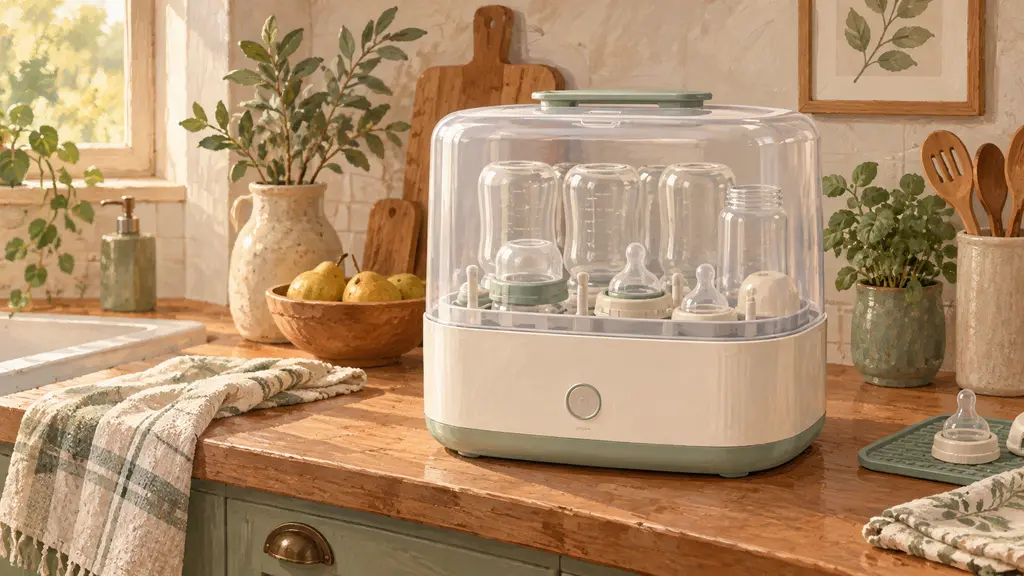
The GROWNSY sterilizer-and-dryer card identifies the selected appliance, but a similar-looking GROWNSY product page is not enough to establish its maintenance recipe. Match the model number and manual to the unit you own. Its dryer function also does not prove that a damaged or incomplete steam cycle was effective.
When to ask for support
If deposits remain after the approved procedure, or the unit shuts down unexpectedly, leaks, smells burned, or has a damaged heating surface, stop and contact the manufacturer. For a wet plug or socket, leave it untouched and switch off the supply safely before qualified help. Do not keep adding stronger acid or dismantle the base.
See sterilizer troubleshooting for the next checks, or sterilizer odor if smell is the main symptom. For replacement planning, use the Saudi bottle sterilizer shortlist and confirm the exact care instructions before buying.
About this guide
- Editing
- Mizaan Home editorial team
- Last updated
Research based on published specifications, without hands-on testing. How we choose
Prices are checked per product; the oldest check on this page:
This analysis is based on published information from USGS: hardness of water.
Frequently asked questions
Can I use vinegar to descale any sterilizer?
No. Use only the cleaner, concentration, contact time, and rinse procedure permitted for the exact model. Do not run a heated acid cycle unless instructed.
Is white residue always harmless limescale?
No. Mineral scale is a possibility, but peeling, corrosion, cracks, or an uncertain mark should be assessed by the manufacturer before further use.
Does filtered water prevent scale?
Not necessarily. Filters remove different substances, and bottled water may contain minerals. Use the water type specified for your appliance.
Can I use food-grade citric acid?
Only if your model permits it and provides a dose. Food-grade labeling does not establish appliance compatibility or replace rinsing instructions.